
Adjustment of financial statements open to the public for use to calculate the company´s valuation using the method of cash flow discounted: the case of Aracruz Celulose S.A.
DOI:
https://doi.org/10.5007/2175-8069.2009v6n11p37Abstract
The changes observed in the economic structure of Brazil and world entailed the need for choice and adoption of a process of evaluation of companies to determine the fair value of the organizations. Among the methods of evaluation, the greater emphasis was given to the methodology of Cash Flow of Discounted, based on discounted future cash flows. In this context, this article aims to estimate the economic value of Aracruz S.A. from the information contained in its financial statements, the variation in the price of its shares traded on BOVESPA, the official indices, interest rates and the rate of growth expected for the country. The results found showed that the value of the shares of Aracruz Celulose S.A. approached the value observed by the method property, but has distanced if the value quoted in BOVESPA, indicating thus the lack of goodwill.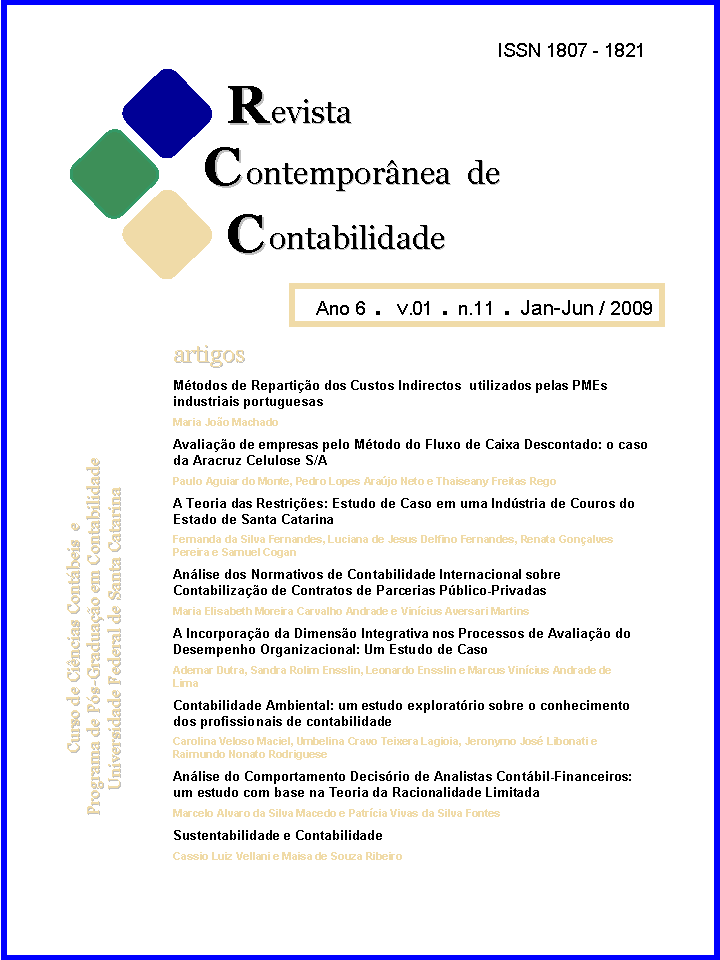
Downloads
Published
How to Cite
Issue
Section
License
Os Direitos Autorais para artigos publicados neste periódico são do autor, com direitos de primeira publicação para a Revista. Em virtude de aparecerem nesta Revista de acesso público, os artigos são de uso gratuito, com atribuições próprias, em aplicações educacionais, de exercício profissional e para gestão pública. A Revista adotou a licença Creative Commons Atribuição 4.0 Internacional - CC BY NC ND. Esta licença permite acessar, baixar (download), copiar, imprimir, compartilhar, reutilizar e distribuir os artigos desde que com a citação da fonte, atribuindo os devidos créditos de autoria. Nesses casos, nenhuma permissão é necessária por parte dos autores ou dos editores. Autores têm autorização para assumir contratos adicionais separadamente, para distribuição não-exclusiva da versão do trabalho publicada nesta revista (ex.: publicar em repositório institucional ou um capítulo de livro).

Esta obra está licenciada sob uma Licença Creative Commons.

