
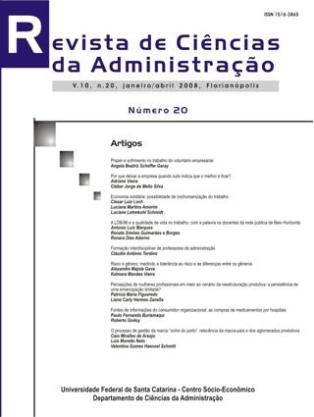
O processo de gestão da marca “Vinho do Porto”: relevância da marca-país e dos aglomerados produtivos
DOI:
https://doi.org/10.5007/2175-8069.2008v10n20p182Resumen
No mundo dos negócios é incontestável o valor das marcas, relacionando-se muito estreitamente com os objetivos organizacionais e implementação de estratégias de negócio. Este artigo tem como objetivo analisar características inerentes à gestão da marca “Vinho do Porto”, destacando a perspectiva da “marca-país” e relevância da gestão desta como vantagem competitiva, para o produto e país de modo geral. A coleta de dados baseou-se na observação - durante período de vivência em Portugal por um dos autores -, informações levantadas em institutos relacionados ao Vinho do Porto, empresas comerciantes, e obras publicadas sobre o Vinho. A análise baseou-se em referencial relacionado à gestão de marcas, publicidade, posicionamento e clusters. Destacam-se os esforços das empresas na divulgação da marca no mercado global, institutos envolvidos e até mesmo do governo, por se tratar de um produto não só gerador de muitos empregos diretos e indiretos, mas um embaixador português mundialmente.
Descargas
Publicado
Cómo citar
Número
Sección
Licencia
El autor deberá garantizar:
- que exista pleno consenso entre todos los coautores para aprobar la versión final del documento y su envío para publicación.
que su trabajo es original, y si se utilizó trabajo y/o palabras de otras personas, estos fueron debidamente reconocidos.
El plagio en todas sus formas constituye un comportamiento editorial poco ético y es inaceptable. RCA se reserva el derecho de utilizar software o cualquier otro método de detección de plagio.
Todos los envíos recibidos para evaluación en la revista RCA pasan por la identificación de plagio y autoplagio. El plagio identificado en los manuscritos durante el proceso de evaluación dará lugar al archivo del envío. Si se identifica plagio en un manuscrito publicado en la revista, el Editor Jefe realizará una investigación preliminar y, de ser necesario, se retractará.
Los autores otorgan a RCA los derechos exclusivos de primera publicación, estando la obra licenciada simultáneamente bajo la Licencia Creative Commons (CC BY) 4.0 Internacional.

Los autores están autorizados a celebrar contratos adicionales por separado, para la distribución no exclusiva de la versión del trabajo publicado en esta revista (por ejemplo, publicación en un repositorio institucional, en un sitio web personal, publicación de una traducción o como capítulo de un libro), con reconocimiento de autoría y publicación inicial en esta revista.
Esta licencia permite a cualquier usuario tener derecho a:
Compartir: copiar, descargar, imprimir o redistribuir el material en cualquier medio o formato.
Adapte: remezcle, transforme y cree a partir del material para cualquier propósito, incluso comercial.
Bajo los siguientes términos:
Atribución: debe dar el crédito apropiado (citar y hacer referencia), proporcionar un enlace a la licencia e indicar si se realizaron cambios. Debe hacerlo bajo cualquier circunstancia razonable, pero de ninguna manera que sugiera que el licenciante lo respalda a usted o su uso.
Sin restricciones adicionales: no puede aplicar términos legales ni medidas tecnológicas que restrinjan legalmente a otros hacer algo que la licencia permite.
