
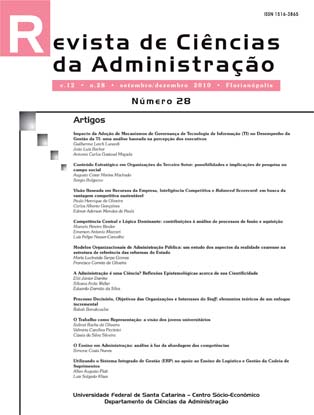
O ensino em administração: análise à luz da abordagem das competências
DOI:
https://doi.org/10.5007/2175-8077.2010v12n28p198Resumo
Este trabalho tem como objetivo analisar a inserção da noção de competências no ensino superior em nível de graduação, tendo sido escolhido o curso de Administração como objeto de análise. Trata-se de pesquisa qualitativa e descritiva,baseada em estudo de caso e dividida em três fases. Em todas as fases foram realizadas entrevistas semiestruturadas, totalizando cinco pessoas entrevistadas entre coordenador de curso, coordenador pedagógico e consultor. Os dados foram tratados conforme o método de análise de conteúdo, tendo sido previamente estabelecidas as categorias de análise. Os resultados apontam para uma possível ausência de clareza quanto ao significado de competências e habilidades; falta de articulação entre as habilidades que se propõe desenvolver no aluno e a intençãoexplicitada de formação; centralização do conhecimento no professor; foco na transmissão de conhecimento em detrimento da formação de competências; dificuldades para a operacionalização do modelo de formação baseado em competências. Pode-se concluir que, a despeito da identificação de habilidades a serem reveladas pelos alunos ao final do curso, não havia uma norma de competência que subsidiasse o processo de formação. Havia indícios, de um lado, da presença de alguns dos elementos da Pedagogia das Competências no curso pesquisado; de outro, isso não significava que houvesse uma orientação sistematizada e articulada, de forma global, entre todos os elementos que compunham o processo de ensino-aprendizagem.
Downloads
Publicado
Como Citar
Edição
Seção
Licença
O autor deve garantir:
- que haja um consenso completo de todos os coautores em aprovar a versão final do documento e sua submissão para publicação.
- que seu trabalho é original, e se o trabalho e/ou palavras de outras pessoas foram utilizados, estas foram devidamente reconhecidas.
Plágio em todas as suas formas constituem um comportamento antiético de publicação e é inaceitável. RCA reserva-se o direito de usar software ou quaisquer outros métodos de detecção de plágio.
Todas as submissões recebidas para avaliação na revista RCA passam por identificação de plágio e autoplágio. Plágios identificados em manuscritos durante o processo de avaliação acarretarão no arquivamento da submissão. No caso de identificação de plágio em um manuscrito publicado na revista, o Editor Chefe conduzirá uma investigação preliminar e, caso necessário, fará a retratação.
Os autores cedem à RCA os direitos exclusivos de primeira publicação, com o trabalho simultaneamente licenciado sob a Licença Creative Commons (CC BY) 4.0 Internacional.

Os autores têm autorização para assumir contratos adicionais separadamente, para distribuição não exclusiva da versão do trabalho publicada neste periódico (ex.: publicar em repositório institucional, em site pessoal, publicar uma tradução, ou como capítulo de livro), com reconhecimento de autoria e publicação inicial neste periódico.
Esta licença permite que qualquer usuário tenha direito de:
Compartilhar – copiar, baixar, imprimir ou redistribuir o material em qualquer suporte ou formato.
Adaptar – remixar, transformar e criar a partir do material para qualquer fim, mesmo que comercial.
De acordo com os seguintes termos:
Atribuição – Você deve dar o crédito apropriado (citar e referenciar), prover um link para a licença e indicar se mudanças foram feitas. Você deve fazê-lo em qualquer circunstância razoável, mas de maneira alguma que sugira ao licenciante apoiar você ou o seu uso.
Sem restrições adicionais – Você não pode aplicar termos jurídicos ou medidas de caráter tecnológico que restrinjam legalmente outros de fazerem algo que a licença permita.
