
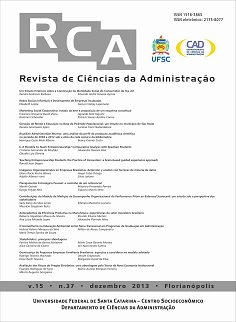
Redes Sociais Informais e Desempenho de Empresas Incubadas
DOI:
https://doi.org/10.5007/2175-8077.2013v15n37p22Resumo
Objetivando explorar e analisar a relação entre redes e desempenho empresarial, este estudo de multicasos longitudinais foi desenvolvido em cinco empresas selecionadas por acessibilidade e conveniência, em diferentes estágios de incubação, na Softville, incubadora de base tecnológica de Joinville-SC. Gestores e empregados dessas empresas responderam ao questionário sociométrico, em três momentos no período de um ano. As redes de confiança, de informação técnica e de informação sobre gestão e suas características estruturais de tamanho, densidade e coesão foram mapeadas. Além disso, foram levantados dados de desempenho das empresas (tamanho da equipe, número de clientes e faturamento). Empresas pesquisadas com redes mais coesas apresentam melhores desempenhos, corroborando indicações da literatura e sugerem que práticas de suporte às empresas incubadas devem privilegiar competência de formação e de atuação em network.
Downloads
Publicado
Como Citar
Edição
Seção
Licença
O autor deve garantir:
- que haja um consenso completo de todos os coautores em aprovar a versão final do documento e sua submissão para publicação.
- que seu trabalho é original, e se o trabalho e/ou palavras de outras pessoas foram utilizados, estas foram devidamente reconhecidas.
Plágio em todas as suas formas constituem um comportamento antiético de publicação e é inaceitável. RCA reserva-se o direito de usar software ou quaisquer outros métodos de detecção de plágio.
Todas as submissões recebidas para avaliação na revista RCA passam por identificação de plágio e autoplágio. Plágios identificados em manuscritos durante o processo de avaliação acarretarão no arquivamento da submissão. No caso de identificação de plágio em um manuscrito publicado na revista, o Editor Chefe conduzirá uma investigação preliminar e, caso necessário, fará a retratação.
Os autores cedem à RCA os direitos exclusivos de primeira publicação, com o trabalho simultaneamente licenciado sob a Licença Creative Commons (CC BY) 4.0 Internacional.

Os autores têm autorização para assumir contratos adicionais separadamente, para distribuição não exclusiva da versão do trabalho publicada neste periódico (ex.: publicar em repositório institucional, em site pessoal, publicar uma tradução, ou como capítulo de livro), com reconhecimento de autoria e publicação inicial neste periódico.
Esta licença permite que qualquer usuário tenha direito de:
Compartilhar – copiar, baixar, imprimir ou redistribuir o material em qualquer suporte ou formato.
Adaptar – remixar, transformar e criar a partir do material para qualquer fim, mesmo que comercial.
De acordo com os seguintes termos:
Atribuição – Você deve dar o crédito apropriado (citar e referenciar), prover um link para a licença e indicar se mudanças foram feitas. Você deve fazê-lo em qualquer circunstância razoável, mas de maneira alguma que sugira ao licenciante apoiar você ou o seu uso.
Sem restrições adicionais – Você não pode aplicar termos jurídicos ou medidas de caráter tecnológico que restrinjam legalmente outros de fazerem algo que a licença permita.
