
Universidad, Innovación e Sociedad: Experiencias de la Universidad de Habana
DOI:
https://doi.org/10.5007/%25xAbstract
A la luz de los modelos contemporáneos que dan cuenta de las interacciones Universidad, Innovación y Sociedad, en este trabajo presentamos un panorama de la evolución de la investigación científica en la Universidad de La Habana, los cambios operados en sus relaciones con los sectores productivos y las transformaciones en sus formas de institucionalización. Se argumenta que desde los tempranos 60’s el modelo de investigación universitaria pretendió ser más “interactivo” que lineal u ofertista. En los 80’s, dentro de un nuevo tejido de relaciones ese modelo evolucionó hacia una mayor incorporación a los procesos de innovación. Presentamos varios ejemplos de innovaciones generadas por la Universidad, los cuales, observados a la luz de los modelos surgidos en los países industrializados, permiten extraer valiosas enseñanzas para la política de investigación e innovación universitaria.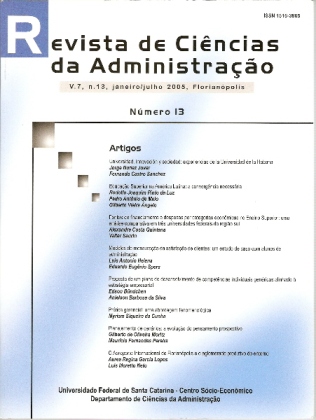
Downloads
Published
How to Cite
Issue
Section
License
The author must ensure:
- that there is complete consensus among all co-authors to approve the final version of the paper and its submission for publication.
- that their work is original, and if the work and/or words of others have been used, these have been duly acknowledged.
Plagiarism in all its forms constitutes unethical publishing behavior and is unacceptable. RCA reserves the right to use software or any other methods of plagiarism detection.
All submissions received for evaluation in the RCA journal are screened for plagiarism and self-plagiarism. Plagiarism identified in manuscripts during the evaluation process will result in the submission being archived. In the event of plagiarism being identified in a manuscript published in the journal, the Editor-in-Chief will conduct a preliminary investigation and, if necessary, retract it.
Authors grant RCA exclusive rights of first publication, with the work simultaneously licensed under the Creative Commons (CC BY) 4.0 International License.

Authors are authorized to enter into separate, additional contractual arrangements for the non-exclusive distribution of the version of the work published in this journal (e.g., publishing in an institutional repository, on a personal website, publishing a translation, or as a chapter in a book), with an acknowledgement of its authorship and initial publication in this journal.
This license grants any user the right to:
Share – copy, download, print, or redistribute the material in any medium or format.
Adapt – remix, transform, and build upon the material for any purpose, even commercially.
According to the following terms:
Attribution – You must give appropriate credit (cite and reference), provide a link to the license, and indicate if changes were made. You may do so in any reasonable manner, but not in any way that suggests the licensor endorses you or your use.
No additional restrictions – You may not apply legal terms or technological measures that legally restrict others from doing anything the license permits.
