
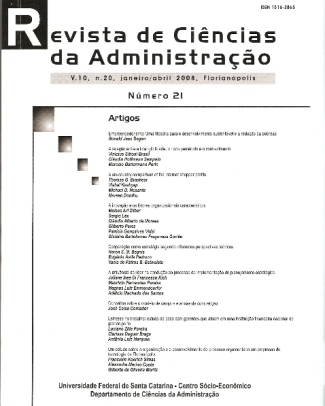
A six-country comparison of the internet shopper profile
DOI:
https://doi.org/10.5007/2175-8069.2008v10n21p54Resumo
As the Internet continues to evolve across the globe, the importance of understanding the similarities and dissimilarities among consumers in different regions is crucial for bothe marketing theory and practice. The authors report the characteristics of Internet shoppers in six countries (United States, England, New Zealand, China, Brazil, and Bulgaria). Internet shoppers and non-shoppers in these countries are profiled and compared on attitudes, motivations, and demographics. The work extends the research of Donthu and Garcia (1999) into an international realm and seeks to build on our current knowledge in this area. Findings show that online shoppers share many similar traits around the world. Internet shoppers in all the countries examined are similar with regard to their desire for convenience, are more impulsive, have more favorable attitudes towards direct marketing and advertising, are wealthier and are heavier users of both email and the Internet.
Downloads
Publicado
Como Citar
Edição
Seção
Licença
O autor deve garantir:
- que haja um consenso completo de todos os coautores em aprovar a versão final do documento e sua submissão para publicação.
- que seu trabalho é original, e se o trabalho e/ou palavras de outras pessoas foram utilizados, estas foram devidamente reconhecidas.
Plágio em todas as suas formas constituem um comportamento antiético de publicação e é inaceitável. RCA reserva-se o direito de usar software ou quaisquer outros métodos de detecção de plágio.
Todas as submissões recebidas para avaliação na revista RCA passam por identificação de plágio e autoplágio. Plágios identificados em manuscritos durante o processo de avaliação acarretarão no arquivamento da submissão. No caso de identificação de plágio em um manuscrito publicado na revista, o Editor Chefe conduzirá uma investigação preliminar e, caso necessário, fará a retratação.
Os autores cedem à RCA os direitos exclusivos de primeira publicação, com o trabalho simultaneamente licenciado sob a Licença Creative Commons (CC BY) 4.0 Internacional.

Os autores têm autorização para assumir contratos adicionais separadamente, para distribuição não exclusiva da versão do trabalho publicada neste periódico (ex.: publicar em repositório institucional, em site pessoal, publicar uma tradução, ou como capítulo de livro), com reconhecimento de autoria e publicação inicial neste periódico.
Esta licença permite que qualquer usuário tenha direito de:
Compartilhar – copiar, baixar, imprimir ou redistribuir o material em qualquer suporte ou formato.
Adaptar – remixar, transformar e criar a partir do material para qualquer fim, mesmo que comercial.
De acordo com os seguintes termos:
Atribuição – Você deve dar o crédito apropriado (citar e referenciar), prover um link para a licença e indicar se mudanças foram feitas. Você deve fazê-lo em qualquer circunstância razoável, mas de maneira alguma que sugira ao licenciante apoiar você ou o seu uso.
Sem restrições adicionais – Você não pode aplicar termos jurídicos ou medidas de caráter tecnológico que restrinjam legalmente outros de fazerem algo que a licença permita.
