
Schumpeter e o desenvolvimento tecnológico: uma visão aplicada às pequenas e médias empresas
DOI:
https://doi.org/10.5007/2175-8077.2011v13n29p38Resumo
A teoria schumpeteriana considera que quanto maiores forem as empresas em um determinado mercado, maior será a competição existente, pois as grandes empresas possuem uma maior capacidade inovadora e de resistência em relação às pequenas, já que entre as grandes o ritmo de introdução de inovações seria mais intenso. Entretanto, faz-se necessário considerar com mais ênfase a capacidade inovadora das Pequenas e Médias Empresas (PMEs). Assim, a questão fundamental para estas empresas está vinculada às suas capacidades de aproveitarem as novas oportunidades que o mercado oferece, dos recursos que elas dispõem ou desenvolvem, das potenciais parcerias que poderiam firmar, bem como das suas ligações com instituições de pesquisa. Portanto, o objetivo principal deste ensaio é apresentar a teoria schumpeteriana sobre o desenvolvimento tecnológico, mostrando-a como uma abordagem fundamental para se compreender as estratégias inovadoras das empresas de maior porte, mas cujos princípios básicos também se aplicam às empresas de menor porte. Nas considerações finais apresenta-se que a inovação tecnológica preconizada por Schumpeter, além de ser um instrumento fundamental para o desenvolvimento e crescimento econômico pode impulsionar a concorrência entre as grandes e também as menores empresas, e podem estas também propiciar parcerias levando-as a um relacionamento ganha-ganha.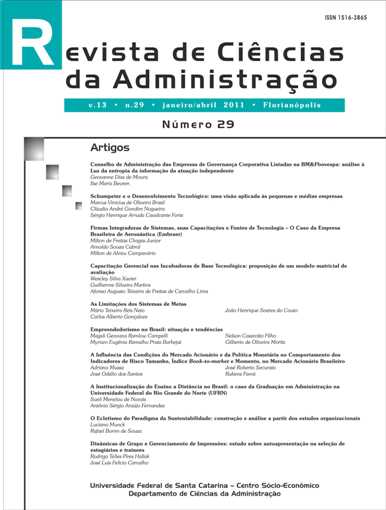
Downloads
Publicado
Como Citar
Edição
Seção
Licença
O autor deve garantir:
- que haja um consenso completo de todos os coautores em aprovar a versão final do documento e sua submissão para publicação.
- que seu trabalho é original, e se o trabalho e/ou palavras de outras pessoas foram utilizados, estas foram devidamente reconhecidas.
Plágio em todas as suas formas constituem um comportamento antiético de publicação e é inaceitável. RCA reserva-se o direito de usar software ou quaisquer outros métodos de detecção de plágio.
Todas as submissões recebidas para avaliação na revista RCA passam por identificação de plágio e autoplágio. Plágios identificados em manuscritos durante o processo de avaliação acarretarão no arquivamento da submissão. No caso de identificação de plágio em um manuscrito publicado na revista, o Editor Chefe conduzirá uma investigação preliminar e, caso necessário, fará a retratação.
Os autores cedem à RCA os direitos exclusivos de primeira publicação, com o trabalho simultaneamente licenciado sob a Licença Creative Commons (CC BY) 4.0 Internacional.

Os autores têm autorização para assumir contratos adicionais separadamente, para distribuição não exclusiva da versão do trabalho publicada neste periódico (ex.: publicar em repositório institucional, em site pessoal, publicar uma tradução, ou como capítulo de livro), com reconhecimento de autoria e publicação inicial neste periódico.
Esta licença permite que qualquer usuário tenha direito de:
Compartilhar – copiar, baixar, imprimir ou redistribuir o material em qualquer suporte ou formato.
Adaptar – remixar, transformar e criar a partir do material para qualquer fim, mesmo que comercial.
De acordo com os seguintes termos:
Atribuição – Você deve dar o crédito apropriado (citar e referenciar), prover um link para a licença e indicar se mudanças foram feitas. Você deve fazê-lo em qualquer circunstância razoável, mas de maneira alguma que sugira ao licenciante apoiar você ou o seu uso.
Sem restrições adicionais – Você não pode aplicar termos jurídicos ou medidas de caráter tecnológico que restrinjam legalmente outros de fazerem algo que a licença permita.
