
Sequestered spaces and defective doors in tales by Collins and Riddell
DOI:
https://doi.org/10.5007/2175-8026.2012n62p99Resumo
In nineteenth-century texts the Victorian home is not merely asetting for supernatural activity—it is the protagonist. This articleconsiders how architecture engendered and shaped hauntedspace within Gothic texts by focusing on a single feature—the door—whose symbolic charge has been widely discussedby critics. However, instead of focusing on psychoanalyticor feminist notions commonly attached to this element, thisarticle considers architectural manuals of the day in order to“read” spatial and cultural implications of the door in Victorianhouseholds, arguing that an excessive concern for privacy andconcealment in life translates easily into Gothic fiction, in theform of spatial anxiety and infiltration. The discussion centerson two literary texts: The Dead Secret (1857) by Wilkie Collinsand The Open Door by Charlotte Riddell (1882).
Publicado
Edição
Seção
Licença
Copyright (c) 2012 Ilse M. Bussing

Este trabalho está licenciado sob uma licença Creative Commons Attribution 4.0 International License.
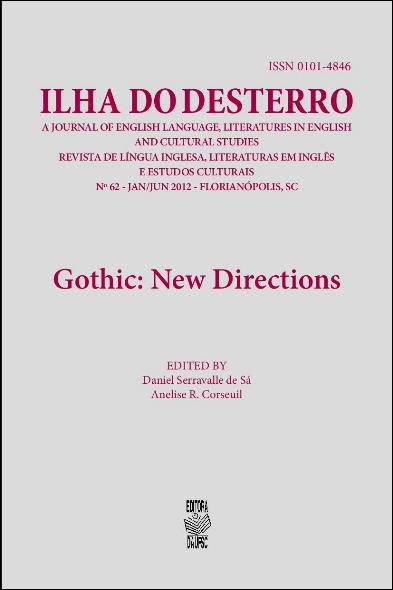
A revista Ilha do Desterro publica artigos e resenhas inéditos, referentes as áreas de Inglês, Literaturas em Língua Inglesa e Estudos Culturais. Publica volumes mistos e/ou temáticos, com artigos e resenhas em inglês e português.
Autores mantém os direitos autorais e concedem à revista o direito de primeira publicação, com o trabalho simultaneamente licenciado sob a Licença Creative Commons Attribution que permite o compartilhamento do trabalho com reconhecimento da autoria e publicação inicial nesta revista.

This work is licensed under a Creative Commons Attribution 4.0 International License.

