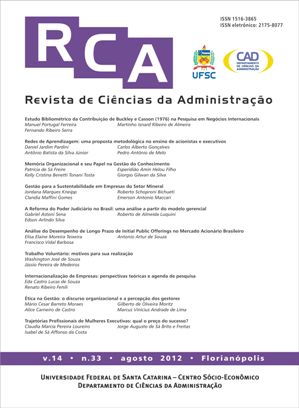
Ética na gestão: o discurso organizacional e a percepção dos gestores
DOI:
https://doi.org/10.5007/2175-8077.2012v14n33p119Resumen
Desde os filósofos gregos têm-se estudado o comportamento humano e seus princípios. Na Modernidade, com o advento das organizações, a preocupação em controlar e prever este comportamento superou a importância da ética e moral, instituindo-se cada vez mais códigos regulatórios de conduta, tendo a racionalidade funcional como base. Porém, não é claro se os gestores das organizações compartilham desses pensamentos e se o discurso organizacional converge com o pessoal. Portanto, esta pesquisa teve por objetivo analisar a convergência entre o discurso organizacional e a percepção dos executivos das indústrias vencedoras do Prêmio Catarinense de Excelência de 2006 a 2010. Foram analisadas as declarações institucionais e realizadas entrevistas com os executivos e concluiu-se que a racionalidade instrumental e os conceitos da Modernidade são determinantes, sendo a percepção dos gestores e o conteúdo dos documentos organizacionais convergentes e com alto grau de coerência.
Descargas
Publicado
Cómo citar
Número
Sección
Licencia
El autor deberá garantizar:
- que exista pleno consenso entre todos los coautores para aprobar la versión final del documento y su envío para publicación.
que su trabajo es original, y si se utilizó trabajo y/o palabras de otras personas, estos fueron debidamente reconocidos.
El plagio en todas sus formas constituye un comportamiento editorial poco ético y es inaceptable. RCA se reserva el derecho de utilizar software o cualquier otro método de detección de plagio.
Todos los envíos recibidos para evaluación en la revista RCA pasan por la identificación de plagio y autoplagio. El plagio identificado en los manuscritos durante el proceso de evaluación dará lugar al archivo del envío. Si se identifica plagio en un manuscrito publicado en la revista, el Editor Jefe realizará una investigación preliminar y, de ser necesario, se retractará.
Los autores otorgan a RCA los derechos exclusivos de primera publicación, estando la obra licenciada simultáneamente bajo la Licencia Creative Commons (CC BY) 4.0 Internacional.

Los autores están autorizados a celebrar contratos adicionales por separado, para la distribución no exclusiva de la versión del trabajo publicado en esta revista (por ejemplo, publicación en un repositorio institucional, en un sitio web personal, publicación de una traducción o como capítulo de un libro), con reconocimiento de autoría y publicación inicial en esta revista.
Esta licencia permite a cualquier usuario tener derecho a:
Compartir: copiar, descargar, imprimir o redistribuir el material en cualquier medio o formato.
Adapte: remezcle, transforme y cree a partir del material para cualquier propósito, incluso comercial.
Bajo los siguientes términos:
Atribución: debe dar el crédito apropiado (citar y hacer referencia), proporcionar un enlace a la licencia e indicar si se realizaron cambios. Debe hacerlo bajo cualquier circunstancia razonable, pero de ninguna manera que sugiera que el licenciante lo respalda a usted o su uso.
Sin restricciones adicionales: no puede aplicar términos legales ni medidas tecnológicas que restrinjan legalmente a otros hacer algo que la licencia permite.